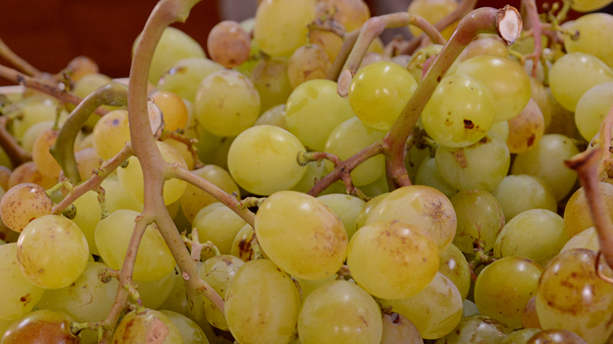
The evolution of agricultural wisdom has shaped the landscape, culture and rural cultivation that describes and identifies the municipality: the moscatel. The muscat grape is the main cultural and socio-agricultural heritage. Today 79.8% of the cultivated land (368 hectares) make up a dryland vine landscape.
The generosity and quality of natural factors such as the Mediterranean climate, the dominant «llebeig» wind and the autumn rains are key so that the grateful and fertile dry lands – clay and calcareous – continue to nourish the vines that the ancestors planted. Climatic factors that each year achieve a delicious grape of moscatel, with an exquisite flavor.
Muscatel, delicate hand treatment
The Moscatel (moscatell) from the Roman variety of El Poble Nou from Benitatxell is a grape that requires delicate and affectionate treatment. Farmers who apply their traditional knowledge and techniques to dryland vines are aware of this. The Moscatel, caressed by the humid winds of Llebeig, achieves its own identity, different from the rest of the growing places. This grape reaches its optimal ripening and harvest time between mid-August and the end of September.
The result is a natural and fresh fruit, characterized by a crunchy, fleshy, golden grain, with a sweet flavor and intense aroma. The excellent quality of this fruit gives it beneficial properties such as antioxidants and vitamin B. In addition, it is rich in natural sugars and carbohydrates, which make it a source of natural daily energy.
The Muscatel is a delicious product for direct consumption as a table grape, but it also serves as raw material for the production of raisins, jam, wines and sweet liqueurs.