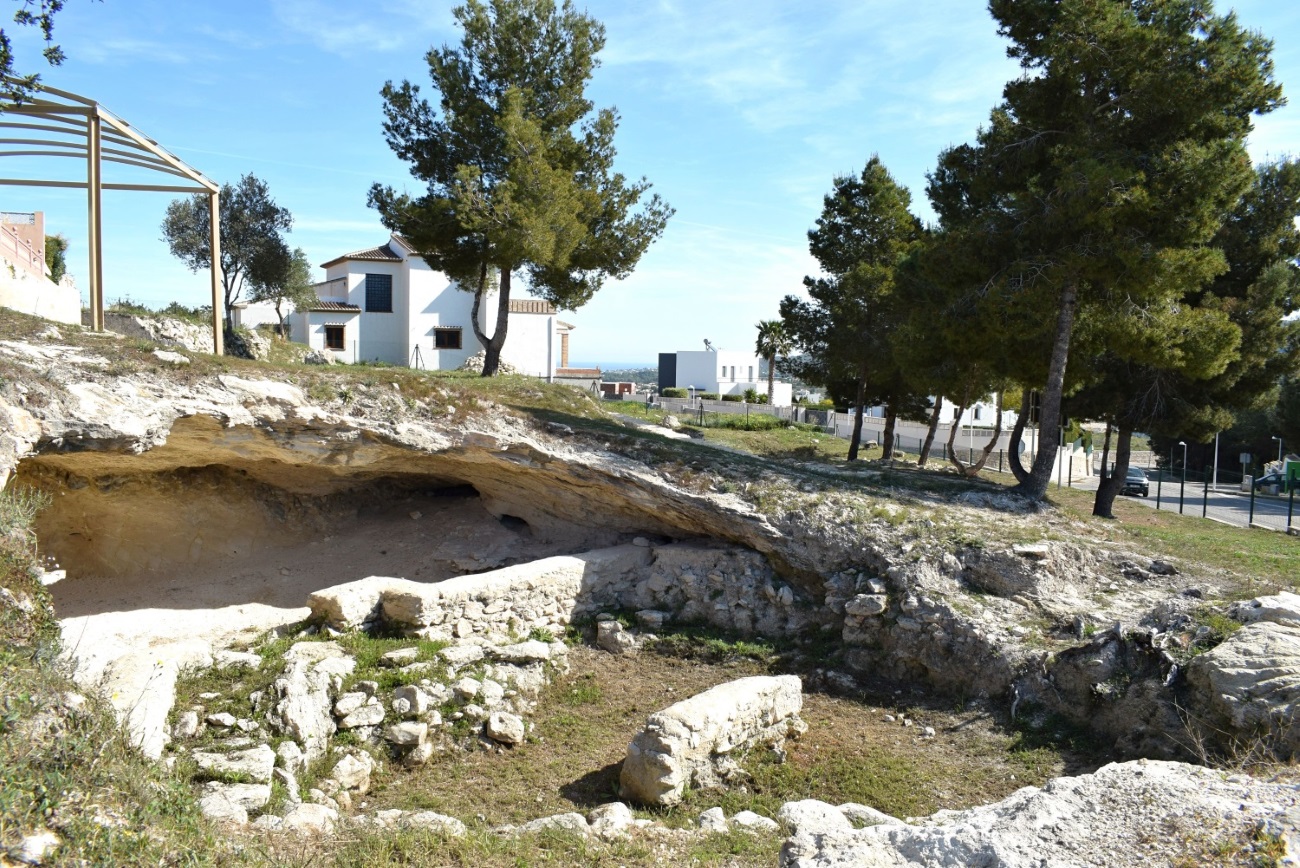
This site encompasses all the cultures that have passed through this municipality, from the Iberians to the first Christian settlers, highlighting the Andalusian presence.
This site is a small shelter that was used as a landfill at least since the 2nd century BC. At the moment, it is not known if it was used as a habitation or dwelling previously, although we do know that it was used as a corral, as evidenced by the walls found here.
The fact that it was used as a landfill has favored its dating since ceramic material from different periods has appeared, highlighting a piece of Iberian ceramics that was found complete.
The Roman occupation of this site was also important. To date, its occupation is also known through ceramics, with many remains of “sigillata ceramics” appearing. In the material found, there are remains that include an arch from the 1st century BC to the 5th century AD.
Under a series of terraces, archaeological structures have appeared that would correspond to an Andalusian farmhouse called “Alabiar” documented in 1277.