
ES
EN
VA
The traditional gastronomy of El Poble Nou de Benitatxell preserves its most traditional flavours and the essence of its past. Simple delicacies shaped by its position between sea and inland landscapes: fishing and agriculture, salted products and sweets with Arab echoes.
Local recipes have been passed down from generation to generation, as have the ways of preparing them in wood-fired ovens, kneaded and cooked with traditional utensils. Fish, vegetables and Mediterranean products harvested from the fields still hold a central place at the table.
That identity also includes artisan wine, Vino Moraig, broad beans in spring and Moscatel grapes in summer: humble yet great delicacies of the town.
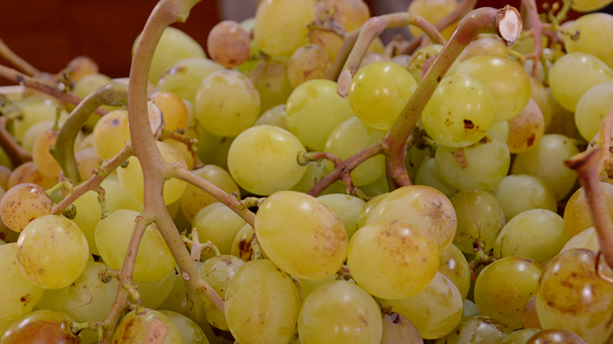
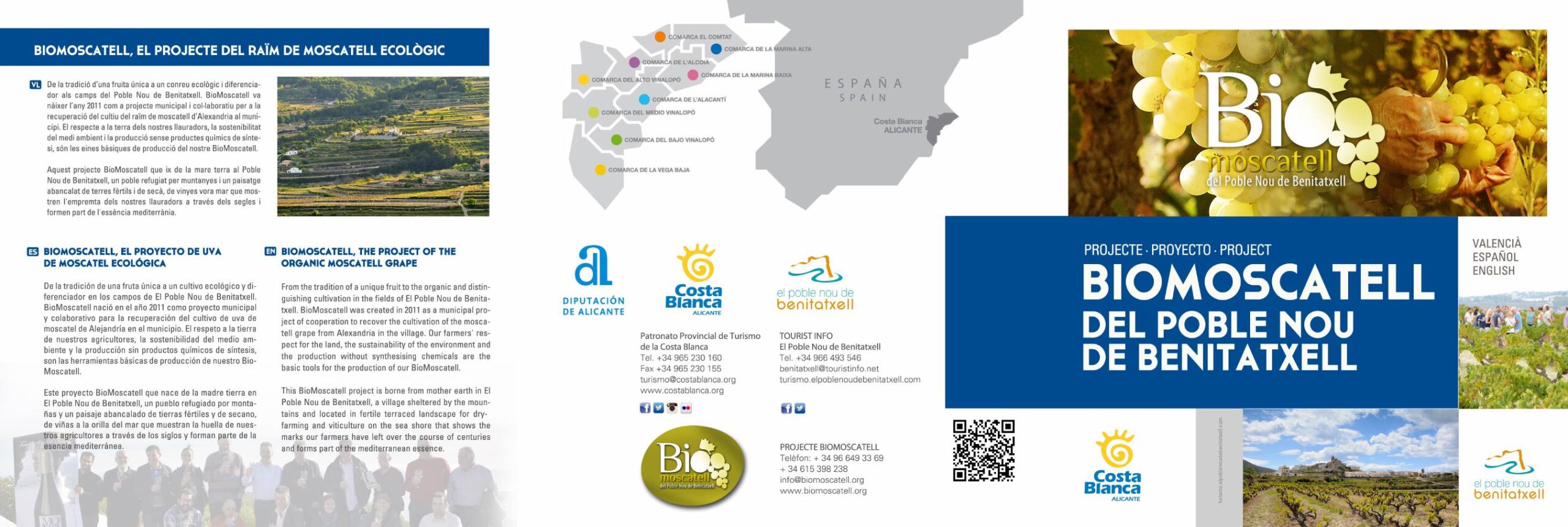
BioMoscatell is the local organic Moscatel grape project promoted by local farmers with the support of the Town Council. It was created to raise awareness of Moscatel as a fruit of El Poble Nou de Benitatxell, maintain agricultural heritage and recover the dry-farming landscape.
The crop uses rainwater and traditional techniques that respect the land to obtain a healthy product, free of chemical residues and linked to a way of working the fields that still defines the town’s identity.
Its distribution is also based on proximity and socially fair trade, reducing emissions and strengthening the link between product, territory and community.
The stew is a stew made with meat and vegetables, with the broth from which a noodle or rice soup is made as a first course and the typical «pilota dolça» (sweet ball) as a dessert. The stew has all kinds of meat, bacon, stalks, chickpeas, turnips, parsnips, carrots, potatoes.
Although the stew is typical of the entire Marina, the dessert that accompanies it, the sweet ball, is made only in El Poble Nou de Benitatxell, thus differentiating this food from the rest of the towns.
The sweet ball is a dessert made with ground almonds, sweet potato, sugar, cinnamon and lemon.
It is a very typical meal that many homes put on the table on special dates such as Christmas, holidays or Sundays. Its characteristic aroma can be seen in the streets of the town these days.
The cocas have the character of the towns of the Marina, its architecture and its vegetables. This simple and precious delicacy is made in the village houses and cottages with typical wood-burning ovens. From a base similar to bread – with flour, water and oil and kneaded in a clay «llibrell» (basin) – the most typical seasoning for cocas is salt, oil and anchovies; «aspencat» (roasted pepper and eggplant) and onion.
The buns have the same seasoning, in which the pasta is blanched.
Another variant is empanadillas («coquetes tapades») usually filled with peas, tomato and onion and spinach.
These cocas, buns or empanadas are usually accompanied with brine and grapes in summer.
The «cruet» is the quintessential seafood dish. This dish comes from the daily fishing of the sailors, who in a casserole cooked the fish of the day «raw» in a base of potatoes and tomato. Rock fish, typical of the area, gives a very characteristic and concentrated flavor to the dish. Although the recipe was originally very open to the catch of the day and, today, it depends more on the preferences of the cook or consumer.
Other dishes made from the seafaring tradition of the area are arroz a banda or marinera, «l’arròs amb sépia» (rice with cuttlefish) or “el putxero de polp» (octopus stew).
The beans are a product closely linked to the municipality. This legume is harvested in April. The most typical bean sets are «faves sacsades» and «arròs amb faves».
«Les faves sacsades» (beans “shakes”) is based on young beans cooked with a sauté of onion and garlic, red paprika, sausage, poached egg and a touch of fennel to flavor them.
«L’arròs amb faves» (rice with beans) uses dried beans. After soaking them, they are peeled. Cooking begins with sautéed onion, red pepper, beans, cabbage and meat. Add the broth and finally the rice.
An opportunity to discover dishes made from beans is the Mitjafava Fest, where the municipality’s restaurants offer innovative tapas with this legume as the protagonist.
beans (faves) are one of the vegetable products inherited from the tradition of legume crops in the municipality. The beans are harvested in April. Among its main recipes are «les faves sacsades», a stew with young beans, and rice with dried beans.
Nowadays, for the most part, the custom of sowing a «seal of faves» (a row of beans) for own consumption is preserved in every home.
A day to enjoy tradition and also culinary innovation through this legume is Mitjafava Fest, which takes place on a Sunday in April in the municipality.
The evolution of agricultural wisdom has shaped the landscape, culture and rural cultivation that describes and identifies the municipality: the moscatel. The muscat grape is the main cultural and socio-agricultural heritage. Today 79.8% of the cultivated land (368 hectares) make up a dryland vine landscape.
The generosity and quality of natural factors such as the Mediterranean climate, the dominant «llebeig» wind and the autumn rains are key so that the grateful and fertile dry lands – clay and calcareous – continue to nourish the vines that the ancestors planted. Climatic factors that each year achieve a delicious grape of moscatel, with an exquisite flavor.
Muscatel, delicate hand treatment
The Moscatel (moscatell) from the Roman variety of El Poble Nou from Benitatxell is a grape that requires delicate and affectionate treatment. Farmers who apply their traditional knowledge and techniques to dryland vines are aware of this. The Moscatel, caressed by the humid winds of Llebeig, achieves its own identity, different from the rest of the growing places. This grape reaches its optimal ripening and harvest time between mid-August and the end of September.
The result is a natural and fresh fruit, characterized by a crunchy, fleshy, golden grain, with a sweet flavor and intense aroma. The excellent quality of this fruit gives it beneficial properties such as antioxidants and vitamin B. In addition, it is rich in natural sugars and carbohydrates, which make it a source of natural daily energy.
The Muscatel is a delicious product for direct consumption as a table grape, but it also serves as raw material for the production of raisins, jam, wines and sweet liqueurs.
The Moraig Wine and BioMoscatell Juice are products made from grape moscatel from the local BioMoscatell project, produced in an environmentally friendly and sustainable way. Its raw material, muscatel, grows on dry lands in El Poble Nou de Benitatxell, taking advantage of the annual rains for the growth and formation of this highly appreciated quality fruit.
These products are born from a participatory project carried out by farmers from El Poble Nou de Benitatxell. This initiative is committed to reconversion towards sustainable agriculture, through the new agroecological dynamics of the territory through training and dissemination to all groups in the municipality.
After launching the first two harvests of table grapes on the market without synthetic chemicals, the BioMoscatell project opted for its diversification with the production of Moraig Wine, made in accordance with organic winemaking regulations, and BioMoscatell Juice.
Moraig white wine continues the essence of the project to maintain and recover the wine culture of El Poble Nou de Benitatxell, conserve the landscape and enhance and dignify the profession of the farmer, and create a product with roots and excellence.
The BioMoscatell Juice is a 100% natural muscatel juice, with a fruity smell and fresh, sweet muscatel fruit flavor.
The «pastissets» are shaped like a dumpling but inside they hide a sweet filling. The «pastissets» are usually made with brandy or almond (formerly also made with “sagí” butter) and filled with sweet potato. Originally they used to be cooked in a wood oven.
This dish is mandatory at all after-meals and gatherings during the Christmas celebrations. Along with them you also usually see «rosegons» or almonds made with almonds, sugar and egg.
The «bunyols» or the buñuelos are also a typical sweet from the municipality. From pumpkin and flour. The dough is made and with the art inherited from generation to generation, artisan circles are obtained with a hole in the middle, made by hand. They are served accompanied by sugar or chocolate for dipping. Buñuelos are typical at any family or friend gathering, in the past very typical on Saint Joseph’s Day. Currently, they can be found at gastronomy fairs and at the Christmas market.
Caspell is one of those humble sweets that says a great deal about the traditional cooking of El Poble Nou de Benitatxell. It is made with a simple dough of flour, oil and sugar, and brings together two ingredients closely tied to the area: almonds and moscatel raisins. Its round shape and restrained preparation point to an older kind of pastry making, built on few ingredients and a great deal of know-how. It is widely understood as part of the Moorish legacy that remained in these lands until 1609.
Monas are the undisputed Easter snack. Both children and adults snack on this typical sweet on Easter days. Monas, like burnt bread, are based on flour, sugar, water, egg, oil, lemon and yeast. After fermentation, it is time to traditionally cook them in the wood oven, on the eve of Easter.
As an anecdote, monkeys usually adapt their size to the age of the diner. From a very young age, children have their monkey smaller in size and it grows over the years. It is also customary for the little ones to put an egg on their monkey and when they go to eat it they sing «Ací em pica, ací em cou, ací menge la mona i em trenque l’ou», breaking the egg on their forehead.